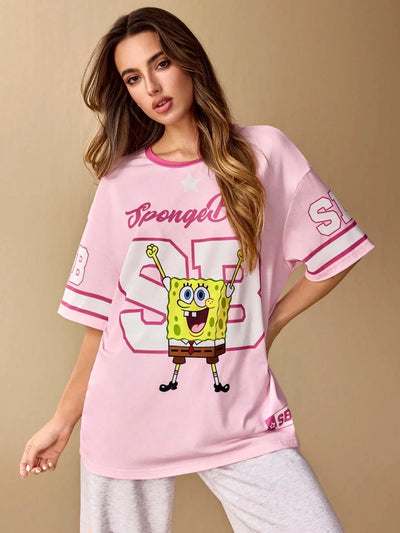
What animal is each SpongeBob SquarePants character?
⚡ The Answer in Brief
SpongeBob is a sea sponge, a phylum of poriferans, an animal with no brain, no heart, and no organs; Patrick is a sea star (asteroidean), which also lacks a centralized brain; Plankton is a copepod, a crustacean a few millimeters long and among the most abundant animals on the planet; Gary is a marine gastropod, in other words, a sea snail.
The series is therefore much more scientifically accurate than it appears: its creator was a marine biologist by training. The only truly deliberate liberties are Sandy, a land squirrel equipped with a diving suit, and Pearl, a sperm whale who is the daughter of a crab—two intentional inconsistencies that became sources of comedy.
📑 Table of Contents
- SpongeBob: The Sponge, Real and Cartoon
- Patrick: The Starfish with No Brain, Literally
- Squidward: Octopus or Squid?
- Mr. Krabs and Pearl: The Crab and the Sperm Whale
- Sandy: A Squirrel Underwater
- Gary: A Meowing Snail
- Plankton: The Most Ambitious Copepod in the World
- Mrs. Puff, Larry, and Other Residents
Most underwater cartoons treat wildlife as mere scenery: colorful fish, an octopus, a mean shark. SpongeBob does the exact opposite. Each main character corresponds to a specific zoological group, and many of the gags stem directly from the chosen animal's biology.
This is no accident: Stephen Hillenburg, the creator of the series, was a marine biologist before becoming an animator. He taught ocean biology and drew educational materials about reef fauna. This dual background explains something fans often notice without being able to name: the inconsistencies in Bikini Bottom are almost always intentional.
This guide reviews the inhabitants, comparing the character to its real-life counterpart. For the history of the drawing itself, see our drawing tutorial; for the geography of the city, the Bikini Bottom locations guide.
SpongeBob: The Sponge, Real and Cartoon
What a Sea Sponge Is
Sponges form the phylum Porifera, from the Latin "pore-bearing." They are animals, not plants, but animals of a very peculiar kind: no brain, no nervous system, no heart, and no digestive system. The body is a network of canals lined with flagellated cells that circulate water and extract nutrient particles. An adult sponge is fixed to the substrate and does not move.
The Graphic Choice of the Square
A natural sponge is irregular, shaped like a tube, cup, or amorphous mass. The character, however, is a perfectly rectangular kitchen sponge. This discrepancy is deliberate: the square is instantly readable on screen, quick to draw, and lends itself to deformation gags. The French name, moreover, differs from the original name, as detailed in our article why SpongeBob is called SpongeBob.
The Most Accurate Biological Gag
SpongeBob absorbs water and inflates, he twists, he returns to his shape. This is exactly the behavior of a sponge: the structure is deformable and returns to its equilibrium position. His complete character sheet is here: all about SpongeBob.
Character Plushies
Four inhabitants of Bikini Bottom to take home, from €27.90 to €32.90.


Patrick: The Starfish with No Brain, Literally
The Biology Behind the Joke
Starfish, or Asteroideans, belong to the echinoderms, like sea urchins and sea cucumbers. They do not possess a centralized brain: their nervous system is a ring around the mouth, extended by a nerve into each arm. Decision-making, if one can call it that, is distributed.
In other words, Patrick's legendary naivety is not a gratuitous caricature: it's a comical translation of an anatomical reality. The character's sheet is detailed in Patrick the Starfish.
The Detail the Series Didn't Include
A starfish moves using a hydraulic system: seawater circulates in an internal network and activates hundreds of tiny tube feet under its arms. It doesn't have blood in the classical sense. Some species regenerate a lost arm, and a few can even regrow an entire individual from a fragment.
And the Color Pink?
Starfish come in pink, red, orange, purple, and blue depending on the species. On this point, the series takes no liberties. Patrick's pink color has even gone viral on the Internet, as our article on Patrick Star memes reminds us.
💡 Did you know?
A starfish can evert its stomach, meaning it can push it out through its mouth to digest prey outside its body, before retracting it. This is how it eats shellfish by slightly prying open their valves. A process that the series, curiously, has never dared to show on screen.
Squidward: Octopus or Squid?
The Debate, and What Can Be Said About It
This is the most debated question in the fandom. The character's English name, Squidward, contains the word for squid, while his appearance—bulbous head, flexible tentacles, absence of lateral fins—is much more reminiscent of an octopus. According to reports from Stephen Hillenburg, the character was designed as an octopus, but a name formed from "octopus" sounded bad, hence the choice of "squid." The French name, Carlo Tentacule (Squidward Tentacles), elegantly sidesteps the issue.
Six Tentacles Instead of Eight
The character has only six appendages, whereas an octopus has eight and a squid has eight arms plus two longer grasping tentacles. The reason is purely practical: two fewer limbs to animate in each frame, across thousands of frames. This is the kind of production trade-off that shapes a design far more surely than an aesthetic choice.
What a Real Octopus Would Have Brought
An octopus has three hearts and blue blood, colored by hemocyanin, a copper-based protein that transports oxygen more efficiently in cold water. It is also capable of changing color and texture in a fraction of a second. A Squidward who would truly blush with anger by changing pigmentation would have been biologically perfect. His character sheet is here: Squidward Tentacles.
| Character | Real Animal | Zoological Group | Biological Trait Used |
|---|---|---|---|
| SpongeBob | Sea Sponge | Porifera | Deformable body, water absorption |
| Patrick | Starfish | Echinodermata | No centralized brain |
| Squidward | Octopus or Squid | Cephalopods | Tentacles, ink hinted at |
| Mr. Krabs | Crab | Decapod Crustaceans | Claws, shell, lateral gait |
| Pearl | Sperm Whale | Cetaceans | Disproportionate size (intentional gag) |
| Sandy | Land Squirrel | Rodents | Breathes air, hence the dome |
| Gary | Sea Snail | Gastropods | Shell, slow movement |
| Plankton | Copepod | Crustaceans | Millimeter size, single eye |
| Mrs. Puff | Pufferfish | Tetraodontidae | Inflates under stress |
| Larry | Lobster | Decapod Crustaceans | Shell, claw strength |
Mr. Krabs and Pearl: The Crab and the Sperm Whale
The Crab, a Very Faithful Model
Mr. Krabs checks almost all the boxes: rigid shell, two asymmetrical claws, mobile stalked eyes, lateral gait. Crabs are decapod crustaceans, meaning they have ten legs including their claws, and they grow by successive molts, shedding their old shells. His character sheet: the authority figures and antagonists of Bikini Bottom.
Pearl, the Most Deliberate Inconsistency
A crab's daughter is a teenage sperm whale, considerably larger than her father. The series has never sought to justify this, and that's precisely what makes it an enduring gag. Biologically, the sperm whale is a toothed cetacean with the largest known brain in the animal kingdom and dives to considerable depths to hunt. Read more: Pearl Krabs.
A Detail Few Notice
The Krusty Krab serves crab patties, handled by a crab. The series plays on this ambiguity without ever resolving it, which has fueled countless discussions—see our fan theories and the article on the crab patty recipe.
Sandy: A Squirrel Underwater
Sandy Cheeks is the only main character who is not marine, and the series derives a perfectly coherent logic from this: a terrestrial mammal breathes air, so she needs a waterproof dome to live and a diving suit to go out. Where other cartoons would have ignored the problem, Bikini Bottom makes it a central element of the setting.
The Dome, a Real Scientific Idea
The principle is reminiscent of experimental underwater habitats: an air bubble maintained under pressure, with an airlock entrance. The series doesn't detail the mechanics, but the intuition is sound, and it serves the character: Sandy is the scientist of the group. Her complete character sheet: Sandy Cheeks.
What a Squirrel Really Does
Ground squirrels are rodents with continuously growing incisors, which they must constantly gnaw to wear down. They store food and locate their caches partly by smell. None of this appears in the series: Sandy is a squirrel by silhouette and Texan accent, not by behavior.
🧠 Tip
If you want to introduce marine biology to a child, start with their favorite character rather than a textbook. Together, explore what a real sponge, a real starfish, a real copepod looks like: the gap between the cartoon and the photo is often what sparks questions. The quiz Team SpongeBob, Team Patrick, or Team Squidward is a good starting point.
Gary: A Meowing Snail
Gary is a marine gastropod, meaning a sea snail with a spiral shell. The detail the series uses most accurately is his retractable eye stalks: Gary retracts them when surprised, exactly like a snail does.
Why he meows
This is a pure invention, and a brilliant narrative device: it immediately establishes Gary as the household pet, a role the audience associates with cats. No gastropod makes sounds of this nature. His profile: Gary the Snail.
The radula, the forgotten organ
Gastropods feed using a radula, a kind of ribbon covered with thousands of tiny chitinous teeth that scrapes surfaces. Some marine species use it to bore through shells. It's one of the most efficient organs in the animal world, and it never appears on screen.
Plankton: the world's most ambitious copepod
Sheldon J. Plankton is a copepod, a small crustacean a few millimeters in size. Copepods are among the most abundant multicellular animals on the planet and form a major part of zooplankton, at the base of the oceanic food chain. In other words, the most insignificant character in Bikini Bottom represents the most numerous animal group in the ocean.
The single eye
Many copepods have a single median eye, inherited from a larval stage common to many crustaceans. The character's design is therefore, on this specific point, remarkably accurate. His profile: Plankton, and the story of his relationship with the computer Karen in Karen the Computer.
The scale ratio
A copepod typically measures between one and two millimeters. Compared to a crab a few centimeters in size, the size difference between Plankton and Mr. Krabs is, in reality, even more overwhelming than what the series shows — which makes the rivalry all the funnier.
Building figures
Four nanoblock characters, €37.90 each, perfect for a shelf.


Mrs. Puff, Larry and the other inhabitants
Mrs. Puff, the pufferfish
This is perhaps the most elegant adaptation in the entire series. A pufferfish inflates by rapidly swallowing water when it feels threatened, which makes it difficult to swallow. The character inflates under the exact same circumstances: stress, fear, exasperation caused by her student. The gag and the biology are one. Her profile: Mrs. Puff.
Larry, the lobster
The lobster shares the status of decapod crustacean with the crab, but with an elongated, muscular abdomen instead of a compact carapace. Its musculature explains the power of its backward thrust, and the character makes it a bodybuilder: the translation is direct. Read: Larry the Lobster.
Non-biological cases
Karen is a computer, the Flying Dutchman is a pirate ghost, DoodleBob is a cartoon brought to life by the magic of a pencil, and Mermaid Man and Barnacle Boy are superheroes. The series allows itself anything as soon as it steps outside the animal kingdom — it is precisely this contrast that makes the biological rigor of the rest so remarkable.
⚠️ Mistake to avoid
Do not confuse an animal sponge with a kitchen sponge. Synthetic sponges sold in supermarkets are made of plastic foam and are not living things; natural sponges, however, are indeed the flexible skeleton of a marine animal. This is the core of the misunderstanding that makes many people believe that SpongeBob is not an animal at all.
Delivery, lead times and returns
If you want to bring a resident of Bikini Bottom home, the conditions are the same for the entire store:
- France and European Union: €5.90.
- Free delivery for purchases over €60.
- Outside the European Union: €7.
- Delivery time: 7 to 14 working days.
Two plush toys exceed the free shipping threshold; only one does not, but a keychain, a mug or a set of stickers is enough to complete it. See also our sets and gift ideas.
Frequently Asked Questions
Is SpongeBob an animal or an object?
An animal. Sea sponges form the phylum Porifera and are indeed animals, despite the absence of a brain, heart, and digestive system. The confusion comes from synthetic kitchen sponges, which are not alive.
Why is SpongeBob square when sponges are not?
It's a graphic choice. A natural sponge is irregular, but the rectangle is immediately legible on screen, quick to draw, and allows for deformation gags. The character is modeled after a kitchen sponge, not the animal.
Is Squidward an octopus or a squid?
His appearance evokes an octopus, his English name refers to a squid. According to reports from the creator, he was designed as an octopus, but a name based on "octopus" sounded bad. He only has six tentacles to simplify animation.
How can Sandy live underwater?
She can't without equipment, and the series acknowledges it: as a land squirrel, she breathes air, hence her watertight dome and diving suit. This is one of the rare inconsistencies that the narrative takes the trouble to justify.
What animal is Plankton exactly?
A copepod, a small crustacean one to two millimeters long. Copepods are among the most abundant multicellular animals on the planet and form a major part of zooplankton, at the base of the oceanic food chain.
Why is Pearl a sperm whale if her father is a crab?
The series has never provided an explanation, and that's intentional: the absurdity of the size difference and the lack of justification constitute the gag itself. The sperm whale is also the cetacean with the largest brain in the animal kingdom.
Do starfish really have brains?
No, not a centralized brain. Their nervous system forms a ring around the mouth, extended by a nerve into each arm. Patrick's naivety is, literally, an anatomical joke.
Why does Gary meow?
It's a narrative invention with no biological basis: no snail makes this type of sound. The meow immediately establishes Gary in the role of a pet, which the audience spontaneously associates with a cat.
What is striking, once the complete list is before your eyes, is the overall coherence. Bikini Bottom is not a fantastical ocean: it is a plausible ecosystem where each inhabitant corresponds to a real zoological group, and where character traits often derive from the animal's anatomy. The rare exceptions — a squirrel in a diving suit, a whale as a crab's daughter — are not oversights but jokes, and they only work because everything else holds together. This is probably the finest legacy left by a marine biologist who became a cartoonist.
📚 Articles you might be interested in
Bring a resident of Bikini Bottom home
Plush toys, figures, and collectibles featuring your favorite characters.
View Toys & Hobbies →